
Table of Contents
The global health and wellness market is booming. From whey isolate to plant-based meal replacements, the demand is skyrocketing. But for manufacturers, booming demand brings a specific set of production headaches.
If you are running a production line, you know that powder is difficult to handle. It flies, it clumps, and it’s expensive. If your equipment isn't up to the task, you aren't just losing raw materials to the floor—you are losing margins to inefficiency.
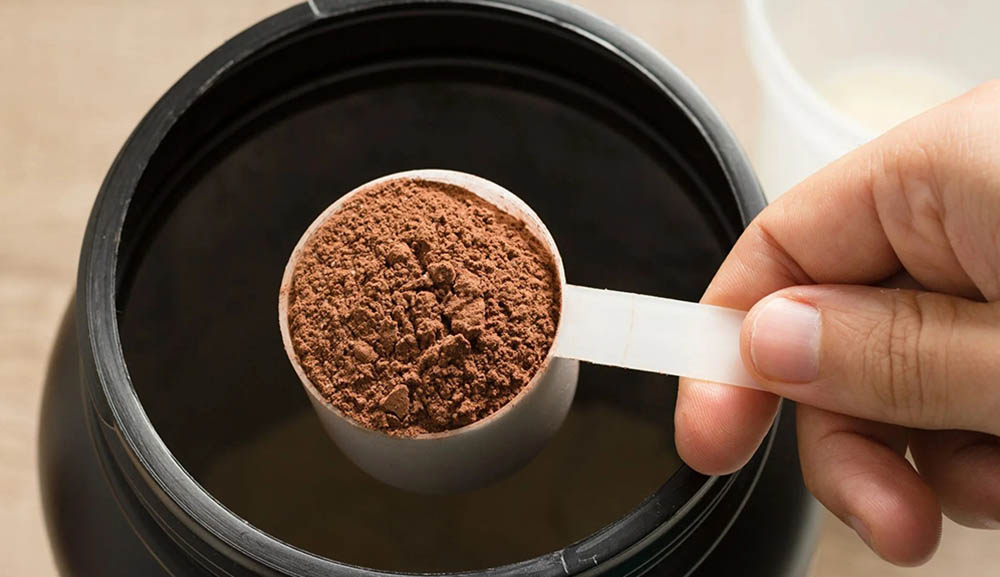
The biggest enemy in a powder factory is dust. When filling protein powders into jars or pouches, traditional or semi-automatic methods often create a "dust storm." This leads to three major problems:
Waste: Every gram of powder floating in the air is money lost.
Contamination: Airborne dust settles on the outside of containers and machinery, creating hygiene risks.
Sealing Issues: Dust in the seal area causes pouches to leak, leading to customer complaints.
A modern protein powder packing machine solves this with centralized dust extraction systems and bottom-up filling technology, keeping the product in the container, not in the air.
Protein powder is sold by weight, and it is not cheap. If your machine overfills every jar by just 2 grams to "be safe," you could be giving away thousands of dollars of product annually.
The solution lies in Servo Auger Dosing. Unlike clutch-brake systems, servo motors control the rotation of the auger screw with digital precision.
Feedback Loops: Advanced lines include an integrated checkweigher. If a jar is slightly light or heavy, the checkweigher sends a signal to the filler to auto-adjust the next fill instantly.
Handling Variable Densities: Different powders behave differently. A sticky vegan blend requires different settings than a free-flowing whey. High-end machines allow you to save recipes for quick changeovers without recalibration.
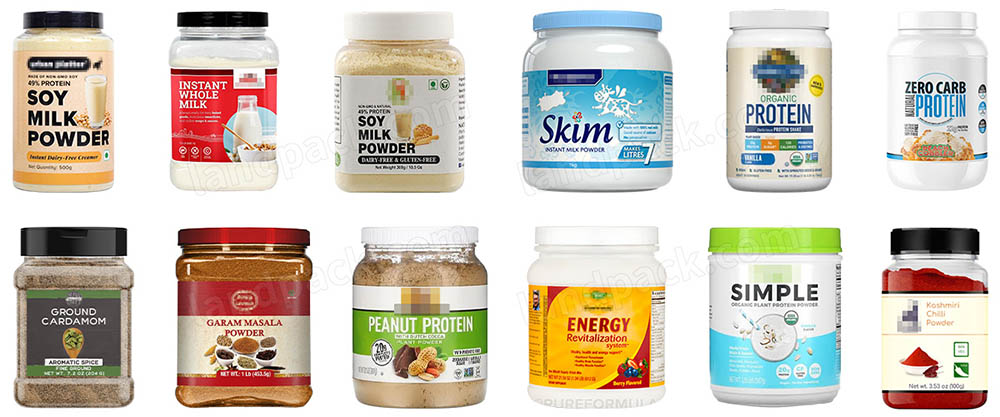
When we talk about a "protein powder packing machine," we aren't talking about a single device. Depending on whether you are selling budget-friendly sample packs, premium zipper pouches, or bulk tubs, your machinery needs will differ. Here are the 5 mainstream solutions:
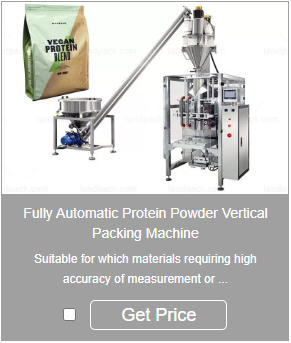
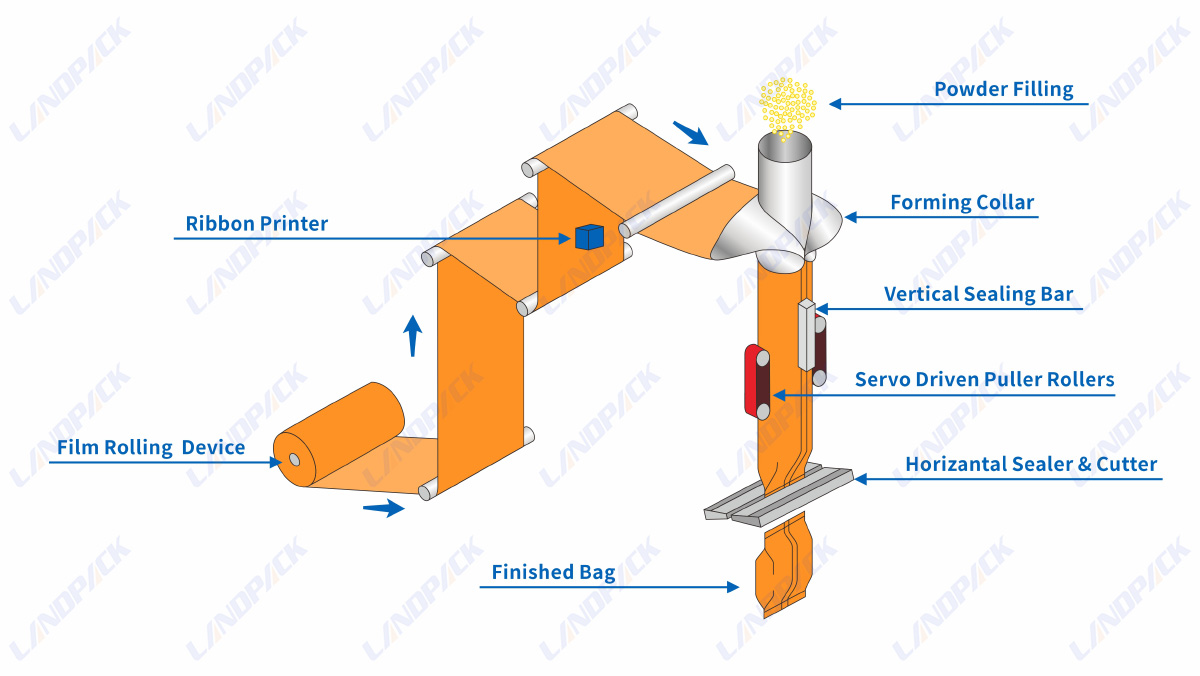
Vertical Form Fill Seal (VFFS) Machine:
Best for: Economy and speed. It forms a bag from a roll of film, fills it, and seals it. Ideal for standard pillow bags or gusset bags seen in cost-effective protein refills.
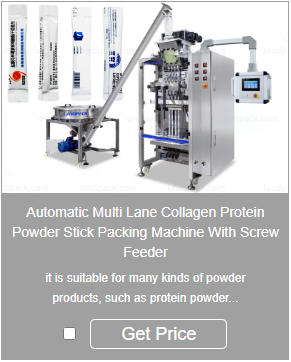
Multi-lane Stick/Sachet Pack Machine:
Best for: High-volume single servings. Unlike a standard VFFS that makes one bag at a time, this machine runs 4 to 12 lanes simultaneously. It is the ultimate solution for producing "on-the-go" protein stick packs or trial-size sachets at massive speeds.
Rotary Premade Pouch Machine:
Best for: Premium branding. If your product comes in a high-end stand-up pouch with a zipper (Doypack), this machine is the gold standard. It opens, fills, and seals pre-made bags with aesthetic perfection.
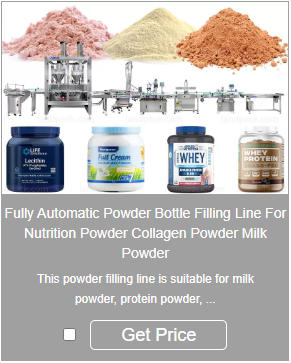
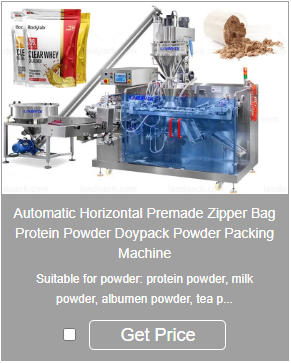
Horizontal Premade Pouch Machine:
Best for: Stability and heavy volumes. Similar to the rotary, but bags move horizontally. It’s excellent for larger, heavier bags of mass-gainer powder that need extra support during filling.
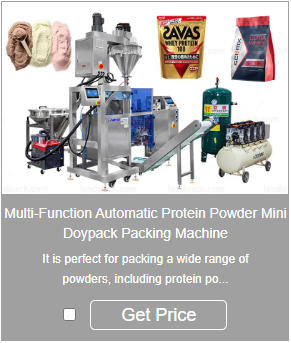
Mini Doypack Pouch Machine:
Best for: Startups and small batches. It handles pre-made bags like the rotary machine but does one at a time. It’s compact, affordable, and perfect for niche organic brands.
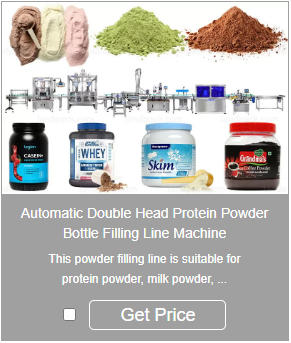
Powder Filling Line:
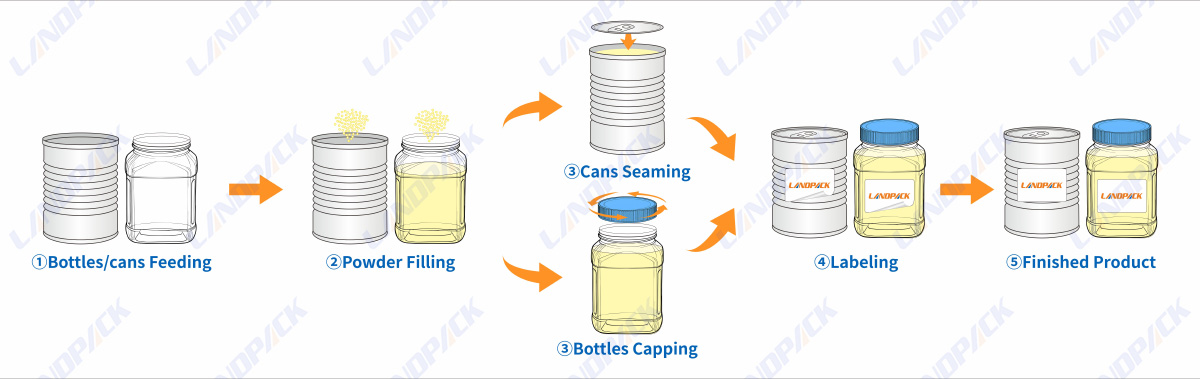
Best for: The classic "gym tub." This isn't just one machine but a system: bottle unscrambler, auger filler, capper, and labeler. It’s the standard for 2lb or 5lb plastic jars.
In the supplement industry, trust is everything. Your production line must look as clean as a laboratory.
Modern filling lines are designed with "Quick Disconnect" features. The hopper opens easily (often split-hopper design), and the auger can be removed for washing without tools. This minimizes downtime between flavor changes—crucial for preventing allergen cross-contamination (e.g., soy vs. dairy). Ensure your equipment is constructed from SS304 or SS316 stainless steel to meet strict GMP standards.
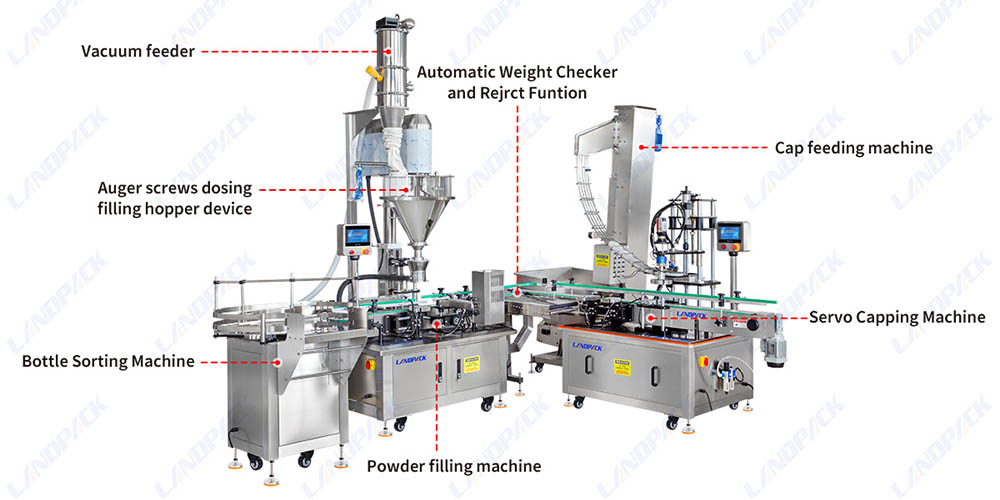
While the packaging formats (bags vs. jars) differ, the heart of a protein powder filling machine is almost always the same: the Auger Filler.
The Physics of Flow: The machine uses a large hopper with a vertical screw (the auger) inside.
Volumetric Dosing: The principle is simple but precise. The servo motor rotates the screw. Since the pitch of the screw is constant, a specific number of rotations displaces a specific volume of powder. For example, 10 rotations might equal exactly 500g.
Agitation: A separate motor drives an agitation blade within the hopper. This breaks up clumps and directs the powder into the center of the screw, ensuring the density remains consistent—key for accuracy.
The Packaging Action:
For Bags: The machine pulls film or picks up a bag, opens it with suction cups, dumps the dosed powder, and heat-seals the top.
For Jars: Sensors detect a bottle underneath, the filling nozzle descends to prevent dust, and the screw dispenses the product directly into the container.
Before you ask for a quotation, evaluate your needs based on these 4 critical dimensions:
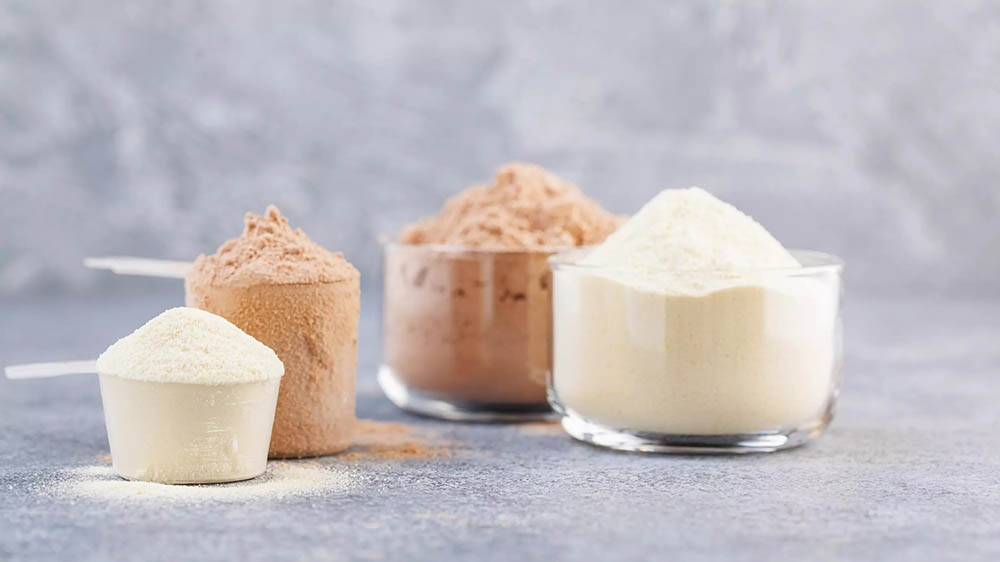
1. Analyze Your Powder Characteristics (Flowability) Not all protein powders are created equal. This is the #1 factor that dictates your machine configuration.
- Free-Flowing (e.g., Granulated Isolate): These flow like salt. You need a machine equipped with a "Spinner Plate" or "Cut-off Gate" to stop the powder from dribbling out when the filler stops.
- Non-Free-Flowing (e.g., Fine Flour, Cocoa-heavy blends): These are cohesive and sticky. You need a machine with a larger auger screw and high-torque agitation to force the product down.
- Pro Tip: If you produce organic protein powder, mention this specifically. Organic powders often lack anti-caking agents, making them "stickier" and requiring specialized Teflon-coated hoppers or vibration systems.
2. Define Your Packaging Format & Versatility Are you married to one container style, or do you need flexibility?
- Rigid Containers (Jars/Cans): Best for premium shelf presence. Look for a linear or rotary protein powder filling machine. Ensure it has "Bottle-No-Fill" sensors to prevent spills if a bottle is missing.
- Pre-made Pouches: Choose a Rotary Packing Machine if your bags have zippers and high-end graphics.
- Roll Stock Film: Choose a VFFS (Vertical Form Fill Seal) machine if you want the lowest cost per package for mass-market samples or refills.
3. Speed vs. Accuracy: The "Golden Balance" Don't just ask for "high speed." Speed often kills accuracy.
- Start-up/SME: A single-head automatic filler (15-30 cans/min) is often sufficient and easier to maintain.
- High Volume: For speeds over 50 cans/min, you need a dual-head or rotary filler.
- Crucial Feature: Always insist on a "Checkweigher Feedback System." This feature communicates with the filler to auto-correct weights in real-time, ensuring you don't give away free product.
4. Hygiene & Changeover Speed (The Hidden Cost) If you run multiple flavors (Chocolate, Vanilla, Berry), changeover time is your enemy.
Look for a "Split Hopper" design. This allows the hopper to open like a clam-shell, giving full access for cleaning without tools.
Check for "Tool-less Removal" of the auger screw.
In a market where raw material costs are rising, efficiency is the only variable you can control. Investing in a high-precision protein powder packing machine isn't just an expense; it is a strategy to protect your margins, ensure product safety, and deliver a premium product to your customers.
Ready to stop the waste? Contact our engineering team today to discuss a layout solution that fits your facility.

Q1: Can one machine handle both jars and pouches?
A: No. They require different transport systems. We recommend separate lines for maximum efficiency and stability.
Q2: How accurate is the filling weight?
A: High precision. We use Servo Auger technology to achieve ±0.5% to 1% accuracy, minimizing expensive product waste.
Q3: Can it handle sticky or organic protein powders?
A: Yes. Our machines feature specialized agitation systems and customized hoppers designed specifically for non-free-flowing organic powders.
Q4: How long does cleaning take between flavors?
A: About 15-20 minutes. Our tool-free "Split-Hopper" design allows for rapid disassembly and cleaning.
Q5: How do you control dust?
A: We use a dual system: Bottom-up filling nozzles to prevent dust clouds, and direct connections to your factory’s dust extraction unit.
Q6: What is the machine's expected lifespan?
A: 10+ years. We build with heavy-duty SS304 stainless steel and top-tier electrical components (Siemens/Schneider) for long-term durability.


Copyright © Foshan Land Packaging Machinery Co., Ltd. All Rights Reserved | Sitemap