
Table of Contents
You have the bag artwork, a target weight and a production number. A supplier has an automatic rotary pouch packing machine with eight stations. Before comparing prices, find out whether it can pick up your bags, fill your product and make saleable packs at the rate you need.
The machine's name tells you how the pouch moves. It does not tell you which filler is fitted, whether a difficult zipper will open consistently or how long a changeover will take. Those details determine whether the line works on your floor.
This guide is for food producers and contract packers using premade pouches for powders, grains, snacks, pet food and other products. Liquids and pastes may also run on a suitably configured rotarypouch packing machine.
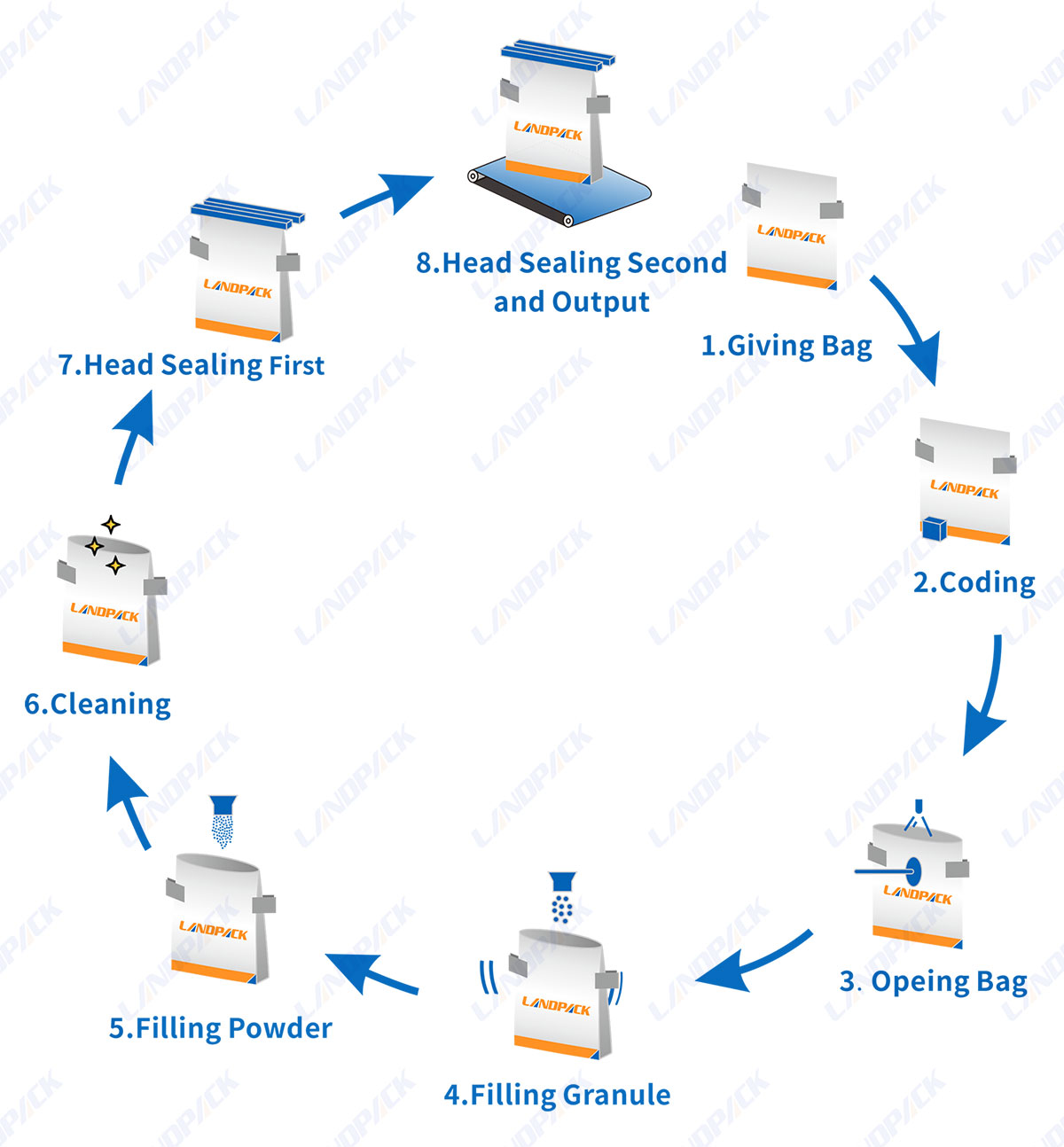
A rotary premade pouch machine takes a finished bag from a magazine and moves it through a series of positions. Depending on the configuration, those positions handle pickup, opening, filling, settling, cleaning around the mouth, sealing and discharge. A zipper opener or second filler may take a position that another project uses for a different task.
Eight stations can help when a pack needs several steps. Powder may need time to settle and the seal area cleaned; a baking mix with chocolate chips may need two metering systems. Ask for a drawing showing what happens at each position on your proposed line. Options that work separately may compete for the same station.
A rotary premade pouch machine handles bags made in advance; a vertical form-fill-seal machine makes bags from roll film. Horizontal systems offer another handling path for premade bags. “Rotary packaging machine” is a broader label, so confirm the quoted unit handles your pouch. Compare machines using your actual bag and product.
A Doypack, or stand-up pouch, may look straightforward in a brochure. On the machine, the useful measurements are the bag width at the grippers, its overall height, the open mouth available for filling and the room left for a sound top seal. Gussets, zipper position, film stiffness and printing can affect pickup and opening.
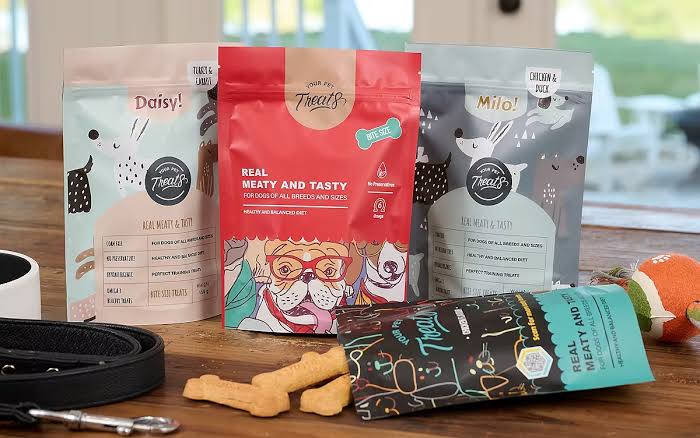
Make a short list of packs you sell most often, followed by occasional formats you would like to add. For each one, record:
| Bag detail | What to check |
| Width, height and gusset | Fit at the grippers and clearance through the filling and sealing steps |
| Film and pouch structure | Whether bags separate, pick up and open consistently |
| Zipper and opening position | Whether the opener clears the zipper and exposes enough mouth for the filler |
| Fill weight and product volume | Whether the filled pouch can be supported and closed cleanly |
| Seal area | Whether product, powder or folds can reach the heat-seal surface |
Send physical bags for a trial, including the softest or hardest-to-open version. A clear, flexible bag can behave differently from a stiffer printed sample of the same nominal size. Ask the supplier to run the smallest and largest bags you expect to use, plus any zipper or gusset format that has caused trouble before.
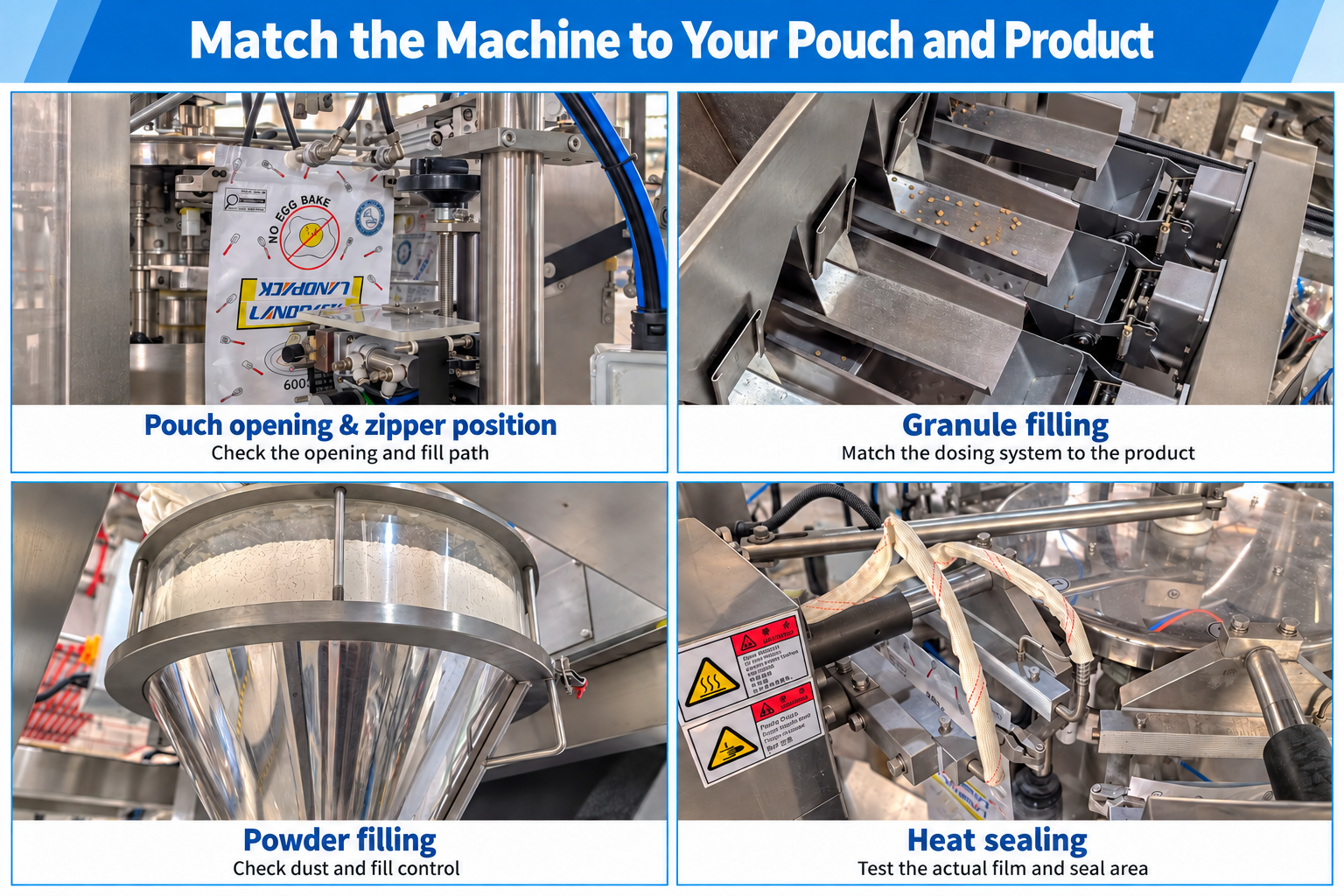
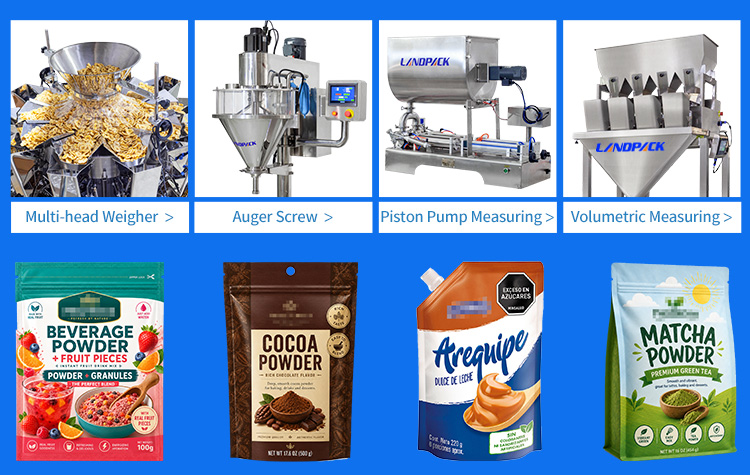
The rotary pouch packing machine handles the pouch. A separate dosing system measures and delivers its contents. That distinction matters when a seller says a machine can pack powder, granules and liquid: the quoted line needs a suitable filler, product path and cleaning arrangement for each material.
| Product | Common filling approach | A question to test |
| Flour blends, spices, protein powder | Auger filler | Can it reach the target weight without excessive dust at the seal? |
| Sugar, rice, seeds or uniform granules | Linear weigher or another suitable scale | Does the product feed steadily at the target weight and rate? |
| Nuts, snacks and mixed pieces | Multihead weigher, where appropriate | Are pieces damaged or trapped near the seal? |
| Sauces and other liquids | Application-specific pump or liquid filler | How are dripping, splashing and the seal area controlled? |
Flow behavior, bulk density, piece size and weight tolerance can change filler selection. For salt or other potentially corrosive products, specify contact materials and cleaning requirements in the quote.
Ask what changes between recipes. Switching products on one scale differs from replacing an auger with a weigher. Even two powders may need different screws and cleaning. Request a changeover plan for your actual products.
Catalog speeds can describe different things. One figure may be the machine's dry-cycle rate; another may be measured while packing an easy product in a particular bag. Neither establishes the output of your finished line.
Set a target in saleable bags per minute and define the test pack: product, weight, pouch dimensions, zipper or other closure, and required seal standard. Then ask how long the trial ran, how many packs were rejected, and whether the feeder and filler kept pace. A line that cycles quickly while waiting for product is not meeting your target.
For short batches, count time between products. Have the supplier demonstrate a representative changeover, measured from the last accepted bag to the first accepted bag of the next.
The top seal deserves its own test. Fine powder can settle on the inside of the mouth. Small pieces can sit across the seal line. A full bag may bulge, leaving too little free film to close flat. Those are different problems, and they call for different process changes.
Depending on the product, the line may need bag settling, dust extraction, a brush or air device to clear the mouth, support for a heavy filled pouch, or an additional sealing step. Ask the supplier to show where each proposed device sits on the station drawing. Then inspect filled samples, including packs made toward the end of a sustained run when dust has had time to accumulate.
A checkweigher can remove bags outside the agreed weight range. It does not necessarily adjust the filler. If you need automatic weight correction, ask whether the checkweigher sends usable feedback to the specific filler in the quote, and request a demonstration of that function. The same approach applies to metal detection, coding and rejection: name the function, then confirm that it is included and integrated.
A quote labeled “rotary packing machine” may cover only the pouch-handling unit. You may also need a weigher or auger filler, feeder, platform, coder, checkweigher, conveyor, guarding and change parts. Allow floor space for the assembled line, cleaning access and utilities.
Request an itemized quote and a layout drawing. The quote should say which bags and products it covers, what the trial criteria are, which change parts are supplied, and who handles installation and training. Check whether a large line will be partly disassembled for shipping and what must happen before production starts at your site.
The LD-8260 rotary premade pouch packing machine shows why a website table may need checking against a project specification. Its public table lists 1,500 g, while Landpack's engineers confirm that the model can accommodate a 3 kg fill. Specify the 3 kg configuration, compatible bag dimensions and required filler in the written quote, then test the filled pouch before acceptance.
For a factory acceptance test, send the actual bags and products if practical.Ask to see a normal, high-volume product and at least one difficult product. If you plan to put two ingredients in the same pouch, test both fills together; proving each filler separately leaves the handoff between them unanswered.
Put the acceptance conditions in writing:
1. Product, pack weight, bag dimensions and film construction for each test.
2. Target saleable output and the duration of each run.
3. Agreed weight range, seal checks and allowed rejects.
4. Changeover and cleaning steps to be demonstrated.
5. Video, retained samples and any measurements the supplier will provide.
6. Installation, reassembly and the checks to repeat at your factory.
A short trial can show how the line handles your main packs and expose problems before shipment.
1. Is a Doypack machine the same as a rotary pouch packing machine?
Doypack describes a stand-up pouch. Rotary describes one way of moving premade bags through a packing machine. A Doypack packaging machine may be rotary or horizontal. For either design, check the exact pouch, zipper and filled weight. Suppliers also use “Doypack machine” for different designs, so ask what the quote covers.
2. Can one rotary machine pack both powder and granules?
It may, if the line includes the right dosing equipment, enough suitable stations and a workable cleaning and changeover procedure. If the two materials go into the same pouch, ask for a complete run of that recipe rather than separate demonstrations.
3. How many bags per minute should I expect?
Use a filled-product trial to set the expectation. Bag size, dose, product flow, pouch opening and sealing can each limit the rate. Request a saleable-pack figure for your named product and test conditions rather than treating a catalog maximum as a production guarantee.
4. What should I send a supplier for a useful quotation?
Send bag drawings and physical samples, product descriptions or samples, target weights, current and planned products, required output, available floor space and any sealing or inspection requirements. Mark which formats account for most of your production. This gives the supplier a basis for quoting a specific line and identifying formats that need further testing.
If you are comparing an eight-station rotary pouch packing machine for several products, start with your most common pouch and the one you expect to be hardest to run. If you still confused about how to pack your product by premade pouch, you could contact our sale engineer for detailed recommendation.


Copyright © Foshan Land Packaging Machinery Co., Ltd. All Rights Reserved | Sitemap