
Table of Contents
A jar of sliced pickles needs two fills. One system puts cucumber pieces into the jar. Another adds brine without splashing it onto the rim. The jar then moves to the closing machine. If one station runs slowly, the whole line slows down.
That is why a search for a pickle filling machine can lead to very different equipment. Some machines fill relish or paste. Others weigh pieces, add brine, and close jars or cans in sequence. Premade pouch packing machines use another process. This article focuses on jars and cans filled with recognizable pieces of food and a separate liquid. It also explains what a line demonstration should show beyond the speed on a data sheet.
When assessing a pickle filling machine, start with what goes into the container. Whole cucumbers, spears, slices, and diced pieces do not feed or settle in the same way. Long pieces may be hard to place through a narrow jar opening. Chopped vegetables may be easier to portion by weight. Sticky pieces can clump in a hopper, while irregular pieces may arrive unevenly. Send a sample of the actual product instead of describing it only as “pickles.”
For pieces that flow freely, a combination weigher or another dosing system may portion the solids before they enter a jar or can. Larger pieces may need a different way to feed and place them. Does the product reach the filler without being damaged? Can the pieces pass through the opening? Is there room left for the liquid and the lid? A trial with real samples answers more than a machine category name.
Specify the solid portion separately from the final net weight. A 500 g pack does not tell the supplier how much should be cucumber and how much should be brine. Give the target solid weight, allowed variation, piece size, and a representative sample. If several products will share a line, include the hardest one to feed.
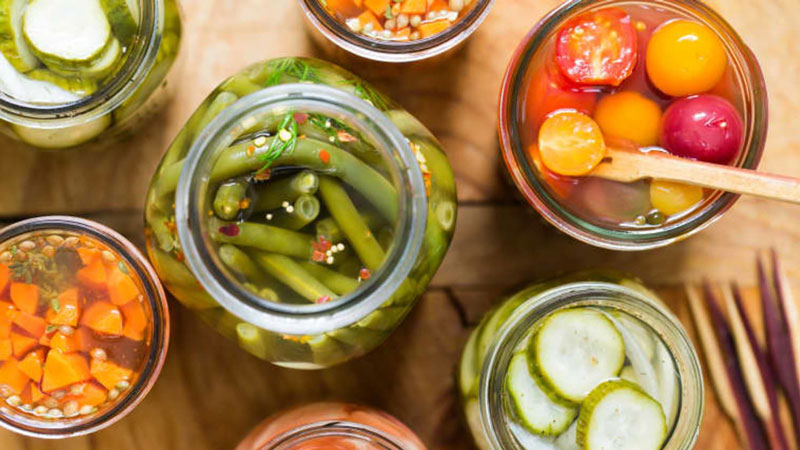
Once the solids are in place, a liquid filling station in the pickle filling line adds brine, vinegar-based liquid, oil, or sauce, according to the product. The liquid supply needs its own route from a preparation or holding vessel to the filler. The nozzle arrangement and dose should be tested with the filled container, because the solid pieces change the space left for liquid. Brine poured into an empty jar is a different test.
Ask the supplier to show both the target liquid quantity and the resulting fill level. A consistent-looking level can still hide variation in the solid portion, especially when pieces settle differently. The reverse can happen too: consistent solid weights may produce uneven visible levels if the liquid dose or placement varies. Checking the two portions separately gives a clearer picture of the finished pack.
Keep the rim clean before closing. If a nozzle splashes liquid onto the rim of a jar or can, the problem may appear at the closing station rather than at the filler. On a trial run, inspect finished containers as well as the area after filling. Test with the intended liquid and product temperature where they affect flow. Water can help with setup, but it does not answer every production question.
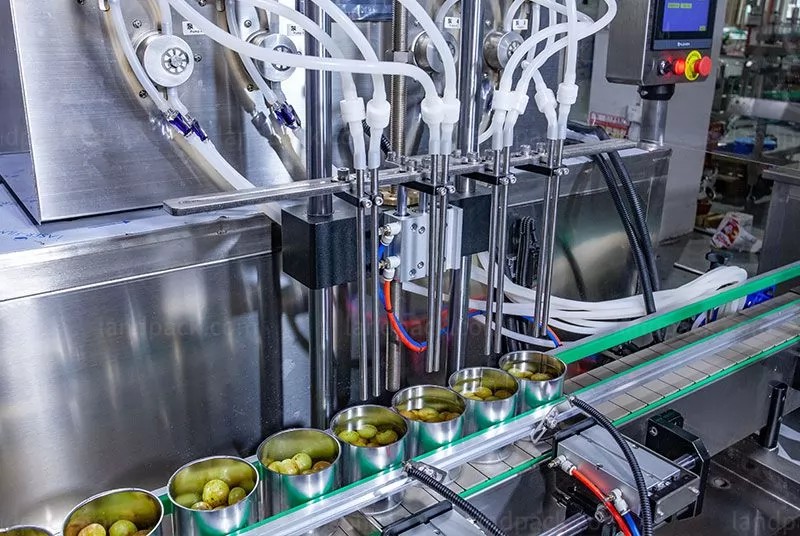
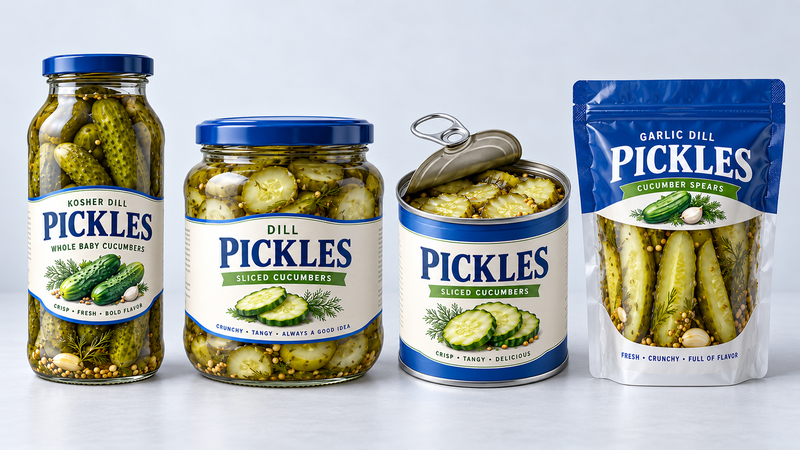
A typical rigid-container line may arrange empty-container feeding, empty-container treatment where specified, solid dosing, liquid filling, closing, coding, and collection along one conveyor route. The exact equipment depends on whether the package is a glass jar, a plastic container, or a metal can. A jar closure and a can seam are different operations, so the quotation should name the closing machine rather than describe both as “sealing.”
Look at a layout drawing, not only a list of machines. Where does the empty-container treatment unit sit? How do solids reach their filler? Is a feeding hopper included? How does the liquid reach its filling tank? Can an operator reach the parts that need cleaning? These are ordinary integration questions, yet a missing station can change the workflow, footprint, and price of a line.
Container treatment is a good example. A drawing might show an unscrambler followed directly by the solid filler, while a separate quotation mentions a can blowing or treatment machine. Before ordering, have the supplier mark the treatment unit on the drawing and confirm whether it is supplied, connected, and sized for every planned container. The same check applies to conveyors, platforms, pumps, and change parts. A complete line is a set of coordinated stations, not merely a collection of suitable machines.
Equipment specifications often quote the speed of an individual station. A liquid filler may state an output per head, while the solid filler, container feeder, and closer have their own figures. Multiplying a per-head number by the number of heads can help estimate capacity, but it does not establish the sustained output of closed, acceptable jars or cans.
Suppose the liquid station has eight heads and each head can complete several fills a minute under stated test conditions. That figure still says little about how quickly irregular solids arrive, whether larger containers take longer to fill, or how the closer performs after the two doses. A short video of the liquid filler alone cannot settle the question. The slowest recurring step, including interruptions and rejects, shapes the output buyers can actually use.
When comparing pickle filling machine quotes, request a complete-line target in finished packs per minute for each product and container size. State the solid portion, liquid portion, closure, and the length of a continuous test. If the supplier gives a range, ask which sample and format correspond to each end. A smaller pack of diced product and a large container of whole pieces should not silently share one speed promise.
During a factory test, count the acceptable closed packs over a defined period. Note pauses for product feeding, splashes, missed containers, closure faults, and adjustments. This gives production and purchasing teams a more useful basis for comparison than the highest momentary rate displayed on a control screen.
A second jar or can size may call for changes at several stations. Guides, parts that space containers on the conveyor, filling height, supports, and closing parts may all be involved. A larger can also needs different solid and liquid portions. It may expose limits that a small-can demonstration does not show. Ask for a list of the parts and sizes actually tested.
For a pickle jar filling machine, send dimensional drawings or physical samples of each container and its matching lid. Include height, body diameter, opening, and the closure specification. A nominal weight such as 565 g or 3 kg is useful for the product plan, but it cannot substitute for container dimensions. Two containers sold at similar weights may have different shapes and openings.
Ask for separate runs on the small and large formats. The demonstration should show container travel, solid dosing, liquid filling, closing, and the finished pack on each size. If a mold, chuck, guide, or other change part is required, identify it in the quotation and have its changeover shown. That makes a format claim visible rather than leaving it to interpretation after delivery.

Pickle products can bring acidic liquids, salt, oil, and food particles into the same work area. Material choices should follow where the product actually touches the equipment and where spills or washdown may reach it. Obtain a parts list for product-contact surfaces, the solid-feed route, liquid pipework, filler, and nearby supports. A general statement that a line is “stainless steel” does not identify which surfaces are covered.
The feeder deserves particular attention. Solids may arrive through an elevator and collect in a hopper before dosing; liquid may come from a separate vessel through a pump. The supplier should explain how each route is drained and cleaned between products. If the line will handle several recipes, ask what must be removed, rinsed, or adjusted during a change. The practical cleaning plan matters at least as much as how the machine looks in a showroom photograph.
Not every product sold as a pickle follows the solid-then-brine sequence. A smooth relish or paste may be filled as one mixture, while whole cucumbers may need a system that places each piece in the jar. Mixed vegetables in oil can behave differently from sliced cucumbers in a thin brine. Describe the largest pieces, the amount of free liquid, and whether the mixture separates while it waits. These details help the supplier decide which filling method to test.
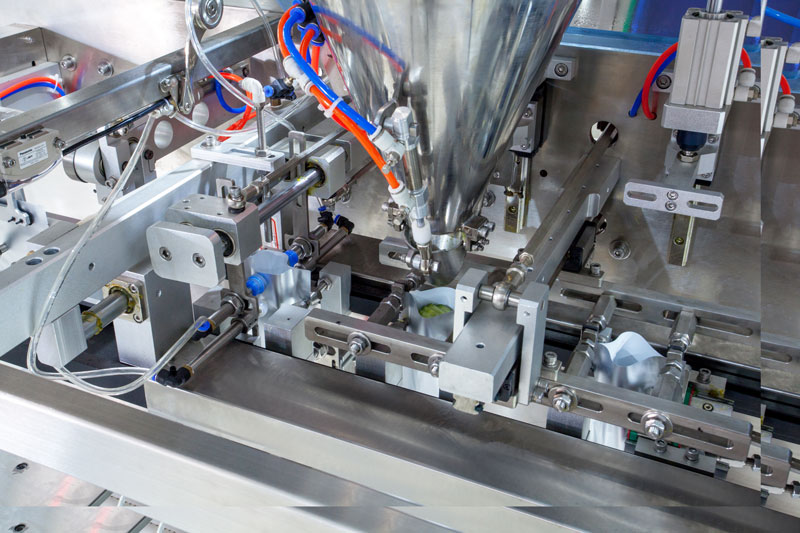
The package also changes the equipment. A premade pouch needs a machine that feeds, opens, fills, and seals the bag; it cannot use the same closing station as a glass jar or metal can. If the product range includes both rigid containers and pouches, request separate process drawings and test plans. A shared product name does not mean one machine can run every package.
Agree on a factory test plan before the line is built. Specify the products, containers, lids, amounts to fill, and target output. Then provide enough samples for setup and repeated runs. If only one size is available for testing, record that limit. A promise that the second size “should also work” is not the same as a demonstrated changeover.
The video should follow the product from container infeed through closing. For each format, show the actual solid and liquid being filled, several finished packs, the operating speed over a stated period, and any adjustments made. Ask to see a sample of the closure check appropriate to the container. A machine-setting video can help operators later, but it serves a different purpose from the acceptance run.
Ask for a short test record to accompany the video. It can list the product and container used, target solid and liquid amounts, test duration, total closed packs, rejected packs, and any stops. Weigh samples from the start and end of the run, then look at the filled packs after they leave the closing station. Repeat the record for each planned container size. If the supplier changes the settings between runs, that change belongs in the record too. A buyer can then compare the result with the agreed target instead of guessing from a few seconds of footage.
Before shipment, collect the final layout, manual, electrical requirements, change-part list, spare-parts list, and packing information. Confirm what the supplier expects the site team to prepare and what installation support is included. These documents help the plant make room for the line and understand its connections before the crates arrive.
The shortest route to a meaningful proposal is a clear product brief: sample pieces, liquid formulation, target solid and liquid portions, every container and lid, required finished-pack rate, and available floor space. With those details, a supplier can discuss a pickle filling machine as a working line rather than offer a price for an isolated filler.


Copyright © Foshan Land Packaging Machinery Co., Ltd. All Rights Reserved | Sitemap