
Table of Contents
1. Landpack at Foodpro 2026 Australia: Packaging Automation Solutions for Food Manufacturers
2. Understanding Food Packaging Requirements at the Exhibition
3. Customer Case: Premade Pouch Packaging for Coffee and Powder Products
4. Customer Case: Automatic Packaging for Frozen and Granular Foods
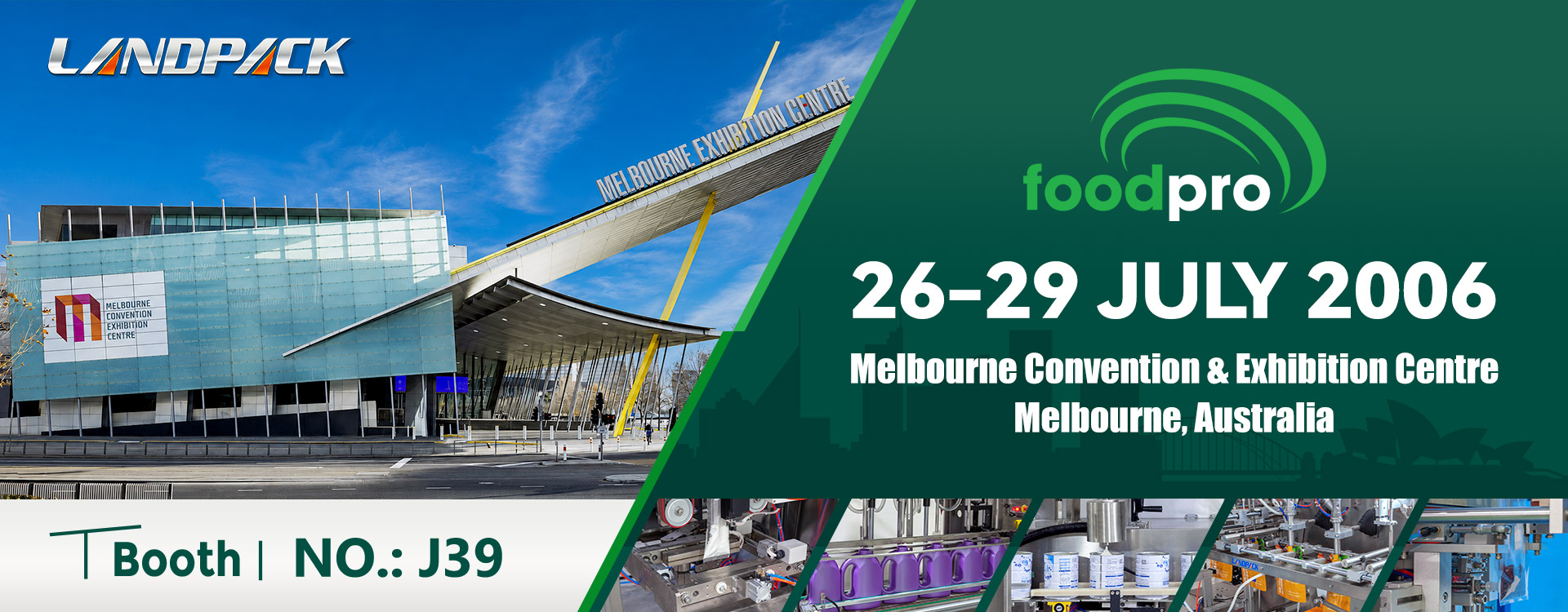
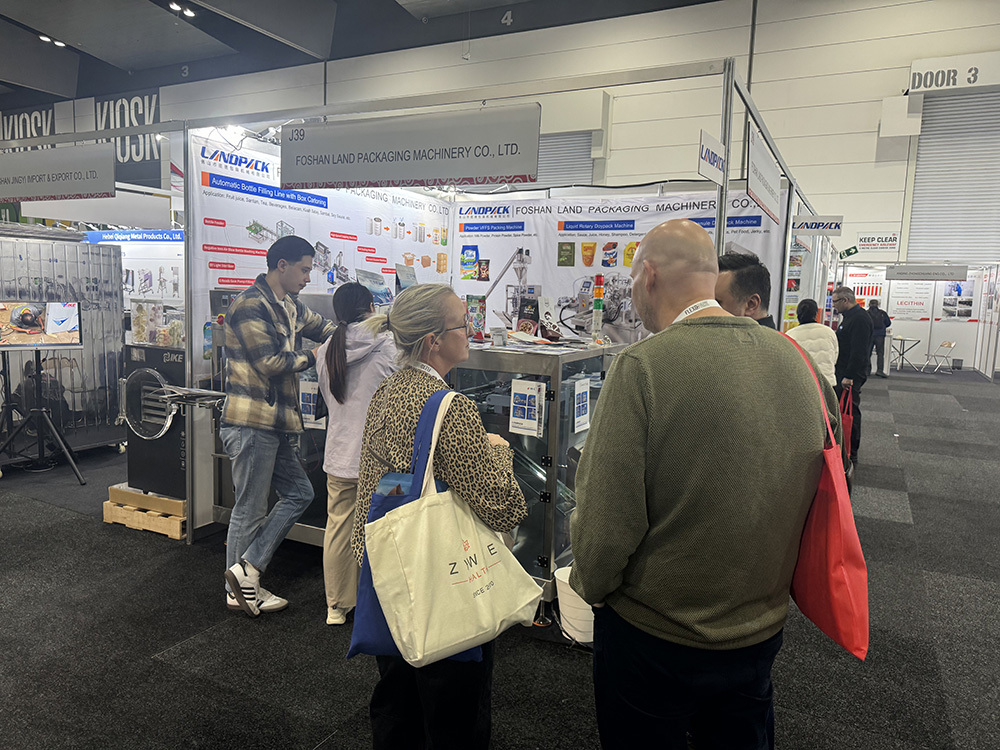
From July 26 to 29, 2026, Landpack participated in Foodpro 2026 Australia at the Melbourne Convention and Exhibition Centre, located at 1 Convention Centre Pl, South Wharf VIC 3006, Australia.
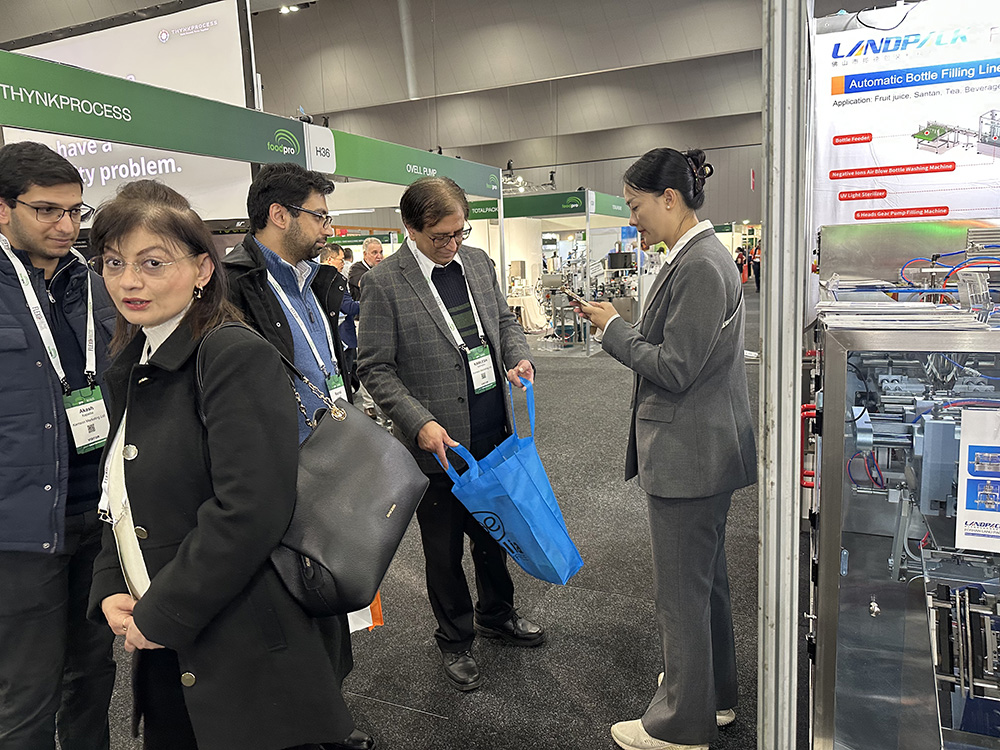
During the four-day exhibition, the Landpack team welcomed food manufacturers, distributors, engineering companies and packaging industry professionals at Booth J.
Visitors discussed a wide range of projects involving food packing machines, filling equipment and complete automated packaging lines. Many customers also brought product information, packaging samples and current production requirements to discuss directly with our team.
Rather than focusing only on machine speed or individual equipment, many conversations started with the customer’s actual product, packaging format and current production process.
Visitors shared information about product characteristics, pouch and container specifications, filling requirements, target production capacity, existing equipment and factory conditions.
These face-to-face discussions allowed Landpack to better understand the packaging challenges faced by food manufacturers in Australia and explore practical solutions covering primary packaging, filling, inspection, secondary packaging and end-of-line automation.
Food manufacturing covers a wide range of products, and each product can present different challenges during feeding, weighing, filling and packaging.
Coffee powder, seasoning, flour, milk powder and nutritional powders require different dosing methods from snacks, frozen foods, nuts, confectionery or other granular materials.
Sauces, beverages and viscous products require another range of filling technologies depending on their viscosity, filling volume, temperature and whether the material contains particles.
At Foodpro 2026, Landpack discussed these differences directly with visitors and helped them evaluate suitable packaging solutions according to their actual production requirements.
Some manufacturers were looking for a standalone packing machine to replace manual weighing and bagging operations. Others already had primary packaging equipment but wanted to add automatic cartoning, case packing or palletizing.
There were also customers planning new production lines who wanted to evaluate the complete process from product feeding to finished case or pallet.
Before recommending equipment, Landpack’s team discussed important project information including:
1. Product characteristics.
2. Filling weight or volume.
3. Package type and dimensions.
4. Required production capacity.
5. Packaging material.
6. Existing production equipment.
7. Required level of automation.
8. Cleaning and product changeover requirements.
9. Factory layout and available installation space.
This information helps determine which feeding, weighing, filling, sealing and downstream packaging systems are suitable for each project.
For free-flowing granular products such as nuts, cereal, candies, snacks and frozen foods, multihead weighing systems are commonly used to combine accurate weighing with automatic packaging.
Powder products require another approach. Products such as coffee powder, milk powder, seasoning, protein powder and flour may require auger filling systems, screw feeders or dust-control structures depending on their density and flowability.
Packaging format is equally important. Discussions at the exhibition covered premade flat pouches, stand-up pouches, zipper bags, pillow bags, gusset bags, sachets, stick packs, bottles, jars, cups, containers, cartons and cases.
By discussing both the product and the final package, Landpack can evaluate the complete packaging process instead of simply recommending a standard machine.
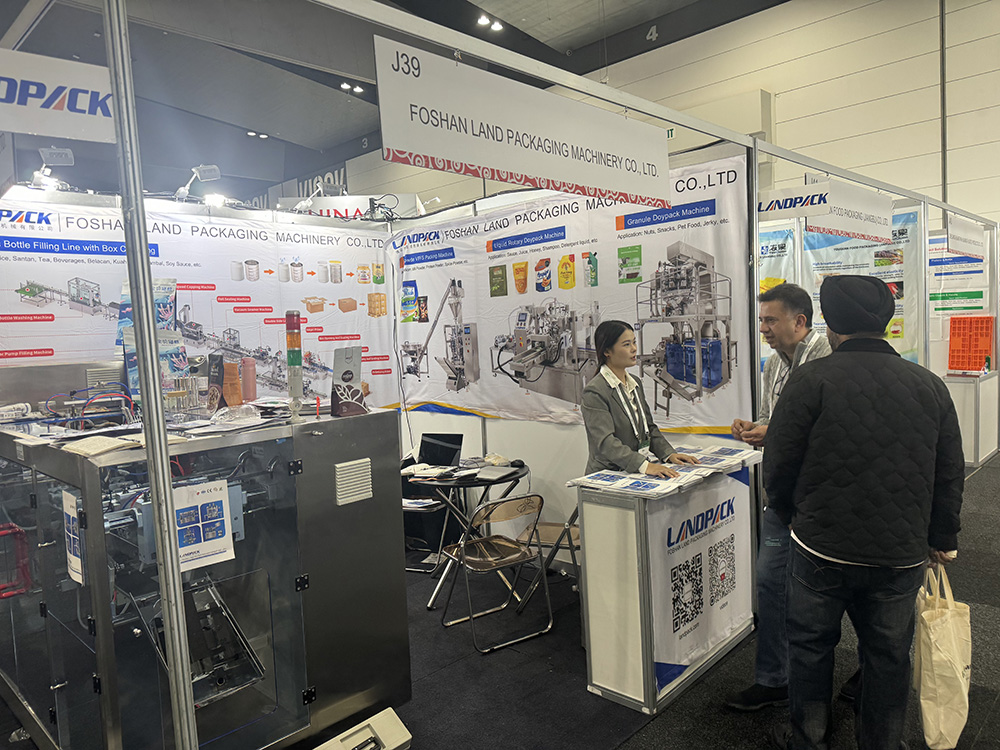
One discussion during Foodpro 2026 involved a customer looking to automate the packaging of coffee and other powdered food products.
The customer was interested in using premade stand-up pouches and zipper bags and wanted to reduce manual dosing, pouch opening and sealing operations while maintaining consistent filling accuracy and package appearance.
Powder packaging can present several practical challenges.
Fine powders may generate dust during feeding and filling. If powder enters the sealing area, it can affect sealing appearance and package reliability.
Different coffee and powdered food products may also have different bulk densities and flow characteristics, which can influence filling accuracy and require different dosing parameters.
Based on the application, Landpack discussed a premade pouch packing machine combined with an auger filling system.
A typical packaging process can include:
1. Automatic powder feeding.
2. Premade pouch feeding.
3. Bag picking and opening.
4. Auger dosing.
5. Powder filling.
6. Dust-control assistance.
7. Bag sealing.
8. Date or batch coding.
9. Finished pouch discharge.
For manufacturers producing several products or pouch sizes, machine adjustment and recipe management are also important considerations.
During the discussion, the customer also considered future flexibility, including whether the same production line could accommodate different filling weights and pouch specifications.
This type of project demonstrates why packaging machine selection should consider not only the current product but also possible future production requirements.
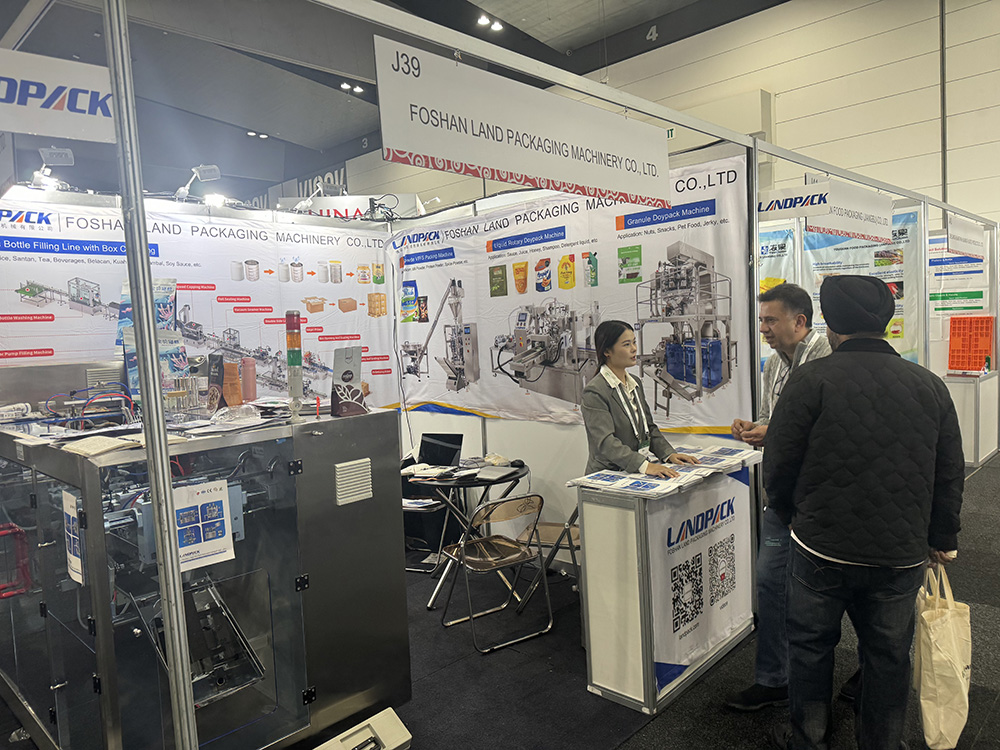
Another customer discussion at Foodpro 2026 focused on automating the weighing and packaging of frozen and granular food products.
The manufacturer wanted to reduce manual weighing operations and improve packaging consistency while maintaining flexibility for several different product types.
For this type of project, Landpack discussed a vertical form fill seal machine combined with a multihead weigher.
The complete automatic packaging process can include:
1. Product feeding.
2. Inclined or Z-type conveying.
3. Multihead weighing.
4. Automatic film unwinding.
5. Bag forming.
6. Product filling.
7. Bag sealing.
8. Date coding.
9. Weight inspection.
10. Finished product conveying.
Although the basic packaging process appears straightforward, different food products can require different machine configurations.
Frozen products may require product-contact parts and machine structures suitable for low-temperature and moisture-prone production environments.
Fragile snacks require more carefully controlled feeding to reduce product breakage, while oily or sticky products may require special hopper surfaces or product-contact treatments to improve discharge.
The customer also asked about connecting the packaging machine with downstream inspection and case packing equipment.
This changed the discussion from selecting a standalone vertical packing machine to planning a more complete automated packaging process.
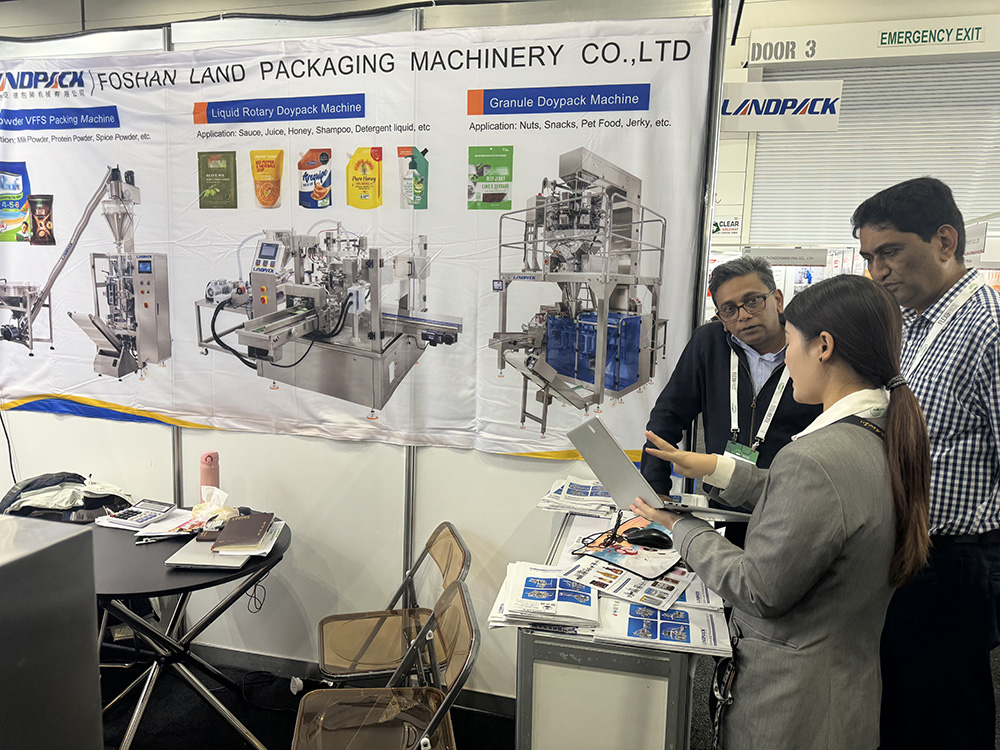
A common trend during Foodpro 2026 was the increasing interest in reducing manual operations after primary packaging.
For many manufacturers, weighing, filling and bag sealing may already be automated, while carton loading, case packing and palletizing still require significant manual handling.
Landpack provides equipment covering multiple stages of the packaging process, including:
1. Vertical form fill seal machines.
2. Premade pouch packing machines.
3. Multilane sachet packing machines.
4. Flow wrapping machines.
5. Bottle and jar filling lines.
6. Cup filling and sealing machines.
7. Spout pouch filling and capping machines.
8. Cartoning machines.
9. Case erecting and sealing machines.
10. Automatic case packers.
11. Checkweighers and inspection systems.
12. Robotic pick-and-place systems.
13. Robotic palletizing systems.
A complete packaging line, however, is more than several machines connected by conveyors.
The production capacity of upstream and downstream machines needs to be coordinated. Product accumulation, line buffering, detection systems, conveyor layout and communication between individual machines must also be considered.
Factory conditions can influence the final solution as well.
Ceiling height, workshop width, operator access, cleaning space, product feeding positions and future expansion plans may all affect the equipment layout.
For this reason, Landpack encourages customers planning complete packaging lines to provide factory drawings or available installation dimensions during the early stages of the project.
Foodpro 2026 provided Landpack with an opportunity to communicate directly with manufacturers about the practical challenges of food production and packaging automation.
Some customers wanted to increase production capacity, while others were more focused on reducing repetitive manual operations, improving package consistency or adding flexibility for different products and package sizes.
These different goals require different equipment configurations.
Landpack supports both standalone machines and customized packaging lines based on the customer’s actual products, packaging formats, production capacity and factory conditions.
Depending on the project, Landpack’s engineering support can include:
1. Product testing and packaging trials.
2. Feeding and dosing system selection.
3. Filling and packaging machine configuration.
4. Customized machine structures.
5. Production line layout design.
6. Coding, labeling and inspection integration.
7. Primary and secondary packaging connection.
8. Factory acceptance testing.
9. Installation and commissioning guidance.
10. Operator and maintenance training.
11. Spare parts and after-sales technical support.
Through these discussions, Landpack aims to help manufacturers evaluate packaging automation from the complete production process rather than from individual machine specifications alone.
The exhibition also gave our team a better understanding of the requirements of Australian food manufacturers and created opportunities for future cooperation in food packing, filling and end-of-line automation projects.
We sincerely thank all customers, partners and industry professionals who visited Landpack at Booth J during Foodpro 2026 in Melbourne.
Although Foodpro 2026 ended on July 29, Landpack’s sales and engineering teams continue to follow up on the packaging projects discussed during the exhibition.
If you are planning a new food packaging machine, filling system or complete automated packaging line, providing the following information can help us evaluate your application:
1. Product name and photos.
2. Product samples if available.
3. Package type.
4. Package dimensions.
5. Filling weight or volume.
6. Required production speed.
7. Packaging material.
8. Existing production equipment.
9. Factory layout or available installation space.
10. Required level of automation.
Based on this information, Landpack can recommend suitable feeding, weighing, filling, packing and end-of-line equipment and prepare a customized technical proposal.
Whether your application involves powder, granule, liquid, sauce, frozen food, snacks or other food products, Landpack works with manufacturers to develop packaging solutions around their actual production conditions.
As a professional packaging machine manufacturer and filling machine supplier, Landpack continues to provide equipment development, customized production line integration, technical consultation and after-sales support for manufacturers worldwide.
Are you planning a new food packaging project or upgrading your current production process? Contact Landpack to discuss your product, package format and automation requirements.
Landpack — Your Partner for Customized Filling and Packaging Solutions.


Copyright © Foshan Land Packaging Machinery Co., Ltd. All Rights Reserved | Sitemap