
Table of Contents
In the competitive world of manufacturing, the efficiency of your production line is only as good as its slowest component. For many factories, that bottleneck is found at the very end of the line: packaging. While upstream processing equipment operates at breakneck speeds, outdated or manual packaging processes often struggle to keep up.
This is where a modern packing system becomes a game-changer.
Whether you are producing food, chemicals, or pharmaceuticals, moving from manual labor to a fully integrated automated packing system is no longer a luxury—it is a necessity for survival and growth. This guide explores how these systems work, the specific machinery involved, and how they can transform your factory’s operational efficiency.
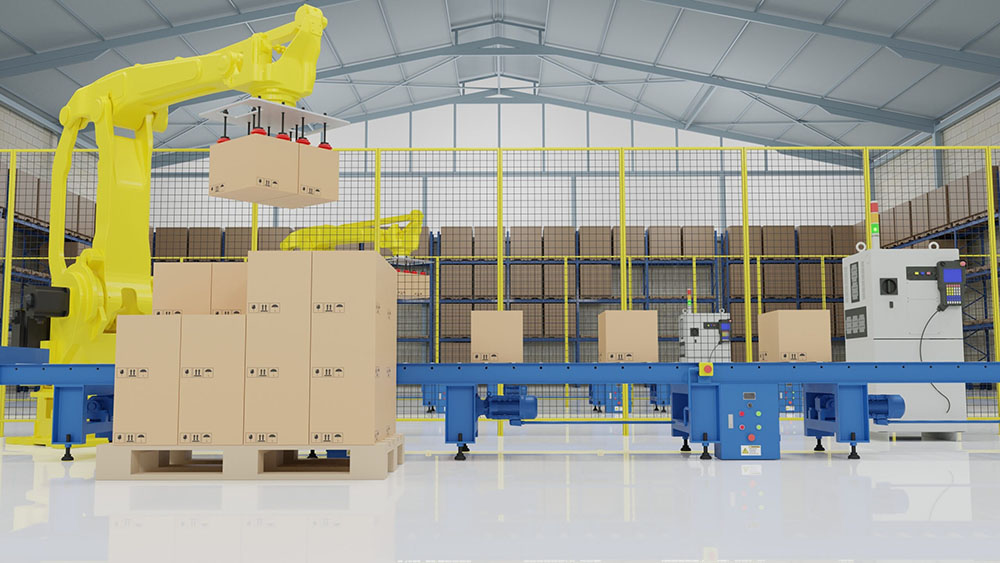
Before diving into the technology, it is essential to understand the "why." Manufacturers today face a perfect storm of challenges that manual packaging simply cannot address.
1. The Bottleneck Effect
Imagine your processing equipment churning out 200 units of product per minute, but your manual packing team can only box 100. The result? You have to throttle your production speed, leaving capacity—and revenue—on the table. An industrial packaging system is designed to match or exceed the speed of your upstream equipment, ensuring a continuous flow.
2. Labor Dependency and Safety
Finding reliable labor for repetitive, physically demanding tasks is becoming increasingly difficult. Manual packaging is also a hotspot for workplace injuries, such as Repetitive Strain Injury (RSI). Automation solves this by assigning dangerous or monotonous tasks to machines, allowing you to redeploy staff to quality control or machine supervision roles.
3. Quality Inconsistency and Material Waste
Human error is inevitable. A tired operator might overfill a bag (product giveaway) or seal a box improperly (product spoilage). Automated systems utilize precision weighing and sealing technologies to ensure every single unit meets strict specifications, significantly reducing material waste and product returns.
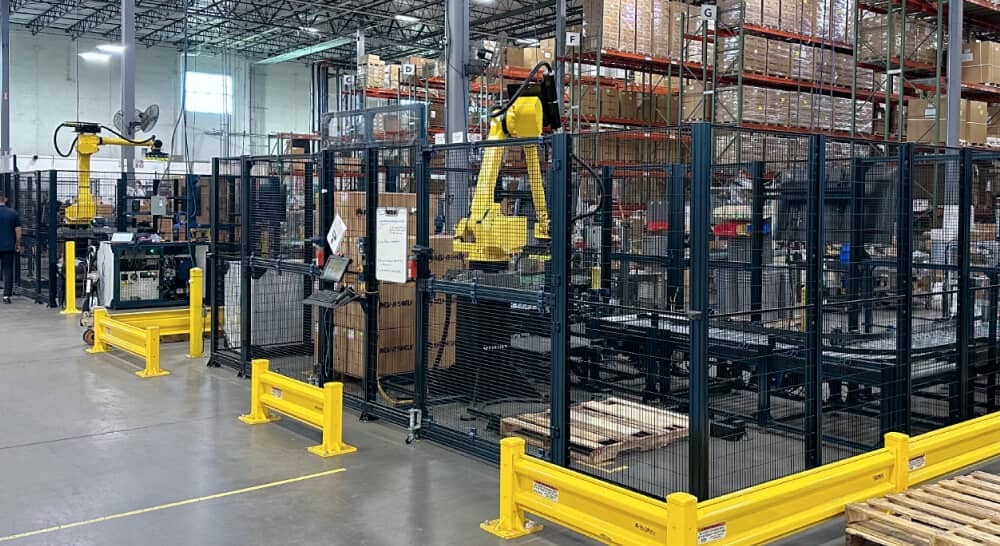
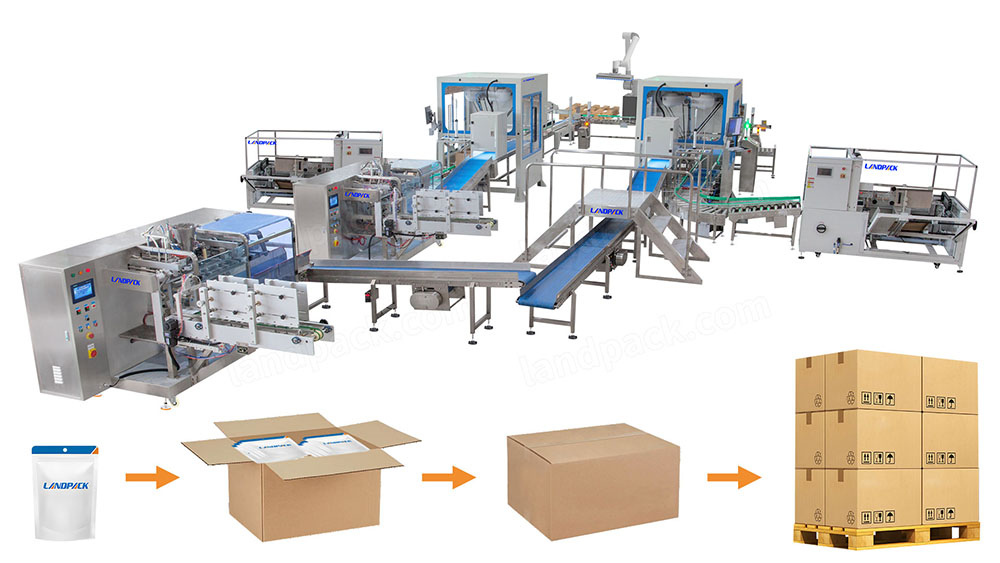
A packing system is not a single machine; it is an orchestrated line of equipment that takes a finished product and prepares it for shipment.
At Landpack Packaging Machinery Co., Ltd., we categorize these systems into four critical stages. A truly efficient line integrates all these stages seamlessly.
A. Feeding and Dosing (The Input)
This is where the product enters the packaging line. Precision is key here.
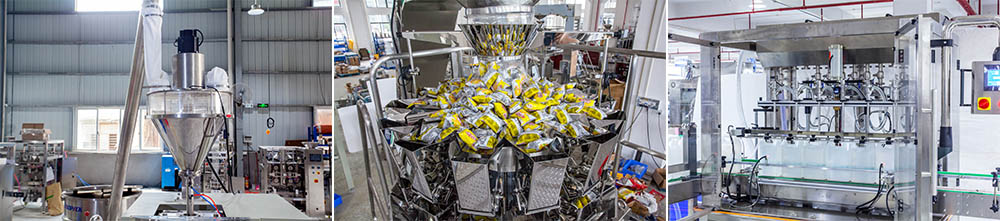
Multihead Weighers: Ideal for granules like nuts, candy, or hardware. They use algorithms to calculate the perfect weight combination.
Auger Fillers: Designed for powders (flour, spices). They minimize dust and ensure accurate dosing.
Pumps: For liquid products, ensuring consistent volume.
B. Primary Packaging (Product Contact)
This is the most critical stage where the product is sealed to ensure hygiene and shelf life. Depending on your product type, the machinery varies:
1. For Flexible Packaging (Bags & Pouches):
VFFS (Vertical Form Fill Seal): The standard for snacks and grains. It forms a bag from a roll of film, fills it, and seals it vertically.
Flow Wrappers: Used for solid individual items like biscuits, soap bars, or bread.
Premade Pouch Packing Machines: These pick up existing high-quality pouches (often with zippers), open them, fill them, and seal them. This is popular for premium branding.
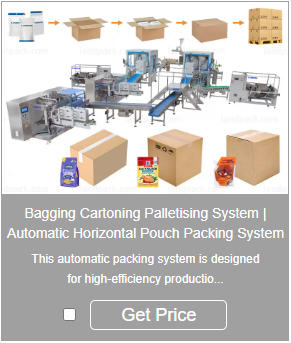
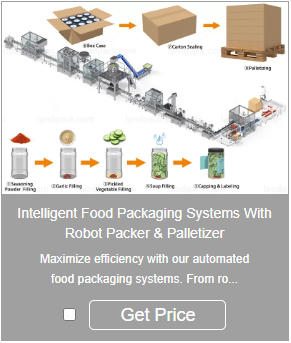

2. For Rigid Containers (Bottles, Cans, & Tins):
Filling Machine: This is essential for liquids, powders, and granules packaged in rigid containers.
Liquid Fillers: Utilize piston or gravity filling for beverages, sauces, or detergents.
Powder/Granule Fillers: Fill jars, cans, or tins with high-value powders (like milk powder) or granules. These lines often include capping machines and induction sealers to ensure an airtight closure.
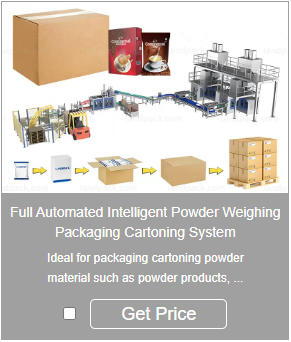
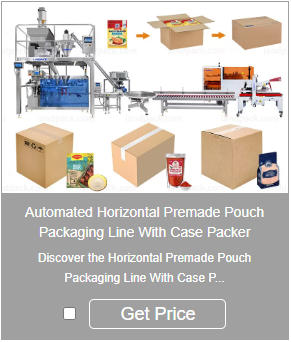
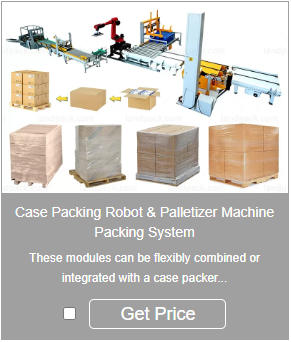
3. Secondary Packaging (Cartoning & Case Packing)
Once the primary package (the bag or bottle) is sealed, it needs to be grouped for shipping.
Cartoners: These machines automatically fold a small carton, insert the product (e.g., a bottle of syrup or a pouch of cereal), and close the flaps.
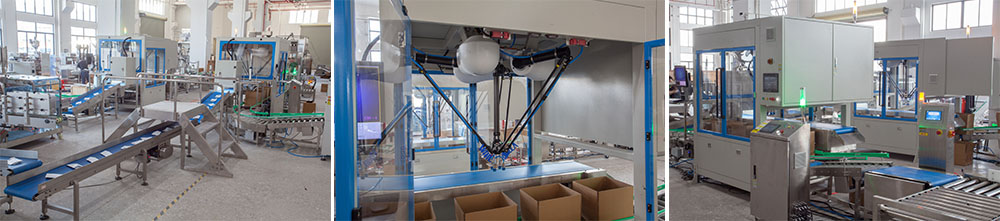
Case Packing Robot: For higher flexibility, robotic arms can pick up individual products and place them into shipping cases.
Parallel Robot (Delta Robot): These are high-speed "spider-like" robots used for pick-and-place applications. They are incredibly fast and can arrange products into specific patterns inside a box before it is sealed.
D. End-of-Line (Palletizing)
The final step is preparing the goods for the warehouse.
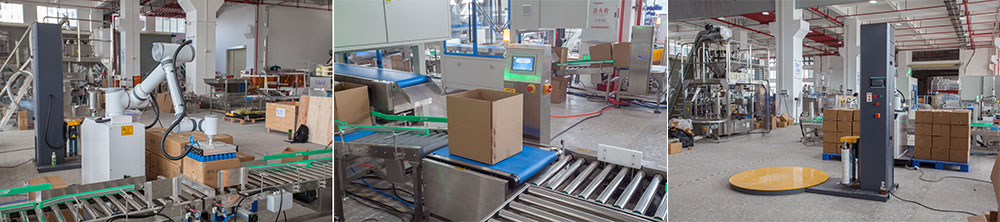
Palletizer Machine: Instead of workers breaking their backs lifting heavy boxes, a palletizer machine (often robotic or mechanical) stacks cases onto a pallet with perfect alignment.
Stretch Wrappers: The pallet is then wrapped in film to ensure stability during transport.
While the technology is versatile, certain industries benefit immensely from specific configurations of a packing system.
1. Food & Beverage Industry
A food packing system requires the highest hygiene standards (often Stainless Steel 304/316 construction).
Application: Potato chips, coffee powder, tomato sauce, or beverage bottling.
Solution: VFFS for chips, Auger fillers for coffee, and liquid filling lines for sauces.
2. Pharmaceuticals
Precision and tracking are paramount.
Application: Pills, capsules, and syrups.
Solution: Bottle filling lines with electronic counters and high-speed cartoners that insert instruction leaflets automatically.
3. Chemical & Agrochemical
Durability is the focus here, as products can be corrosive or dusty.
Application: Fertilizer pellets, laundry detergent, or motor oil.
Solution: Heavy-duty bagging machines or rigid plastic bottle filling lines with anti-corrosion features.
Why should a factory owner invest in this technology?
Seal Integrity: Automated temperature and pressure controls ensure airtight seals, extending the shelf life of food and chemical products.
Data Integration: Modern systems connect to your factory's ERP. You can track exactly how many units were produced, the exact weight of material used, and predict maintenance needs before a breakdown occurs.
Flexibility: Advanced systems allow for rapid changeovers. You can switch from packing 500g bags to 1kg bags, or from round bottles to square bottles, often with just a few adjustments on the touchscreen (HMI) and a quick tool change.

Selecting the right industrial packaging system can be daunting. Here is a simplified buyer’s guide:
Analyze Your Product Characteristics: Is it free-flowing (like rice) or sticky (like gummy candy)? Is it liquid or powder? This dictates your feeding and filling mechanism.
Define Your Speed Requirements: Calculate your required output in Packs Per Minute (PPM). If your production makes 100 items a minute, your packing line should ideally handle 110 to account for surges.
Consider Floor Space: Do you have a long, narrow space (linear layout) or a square area (rotary or U-shaped layout)? We can design the line to fit your footprint.
Evaluate Secondary Packaging Needs: Do you need a simple box taper, or do you need a case packing robot that can handle delicate arranging of products?
Future-Proofing: Ensure the system is modular. Can you add a palletizer machine later if your budget is tight right now?
Finding a manufacturer is easy; finding a partner is hard.
Landpack Packaging Machinery Co., Ltd. (Landpack) is a premier manufacturer specializing in complete packaging solutions. We don't just sell machines; we engineer packing systems that solve specific production problems.
Global Trust & Proven Data:
Our commitment to quality has earned us the trust of over 1,000 clients across 80+ countries. From small family-owned businesses to large multinational corporations, Landpack has delivered Hundred of customized lines that run 24/7.
Why Manufacturers Choose Landpack:
Comprehensive Solutions: From the initial product feeding to the final palletizer machine, we provide the entire line. This means you have one point of contact for compatibility and service.
Customization: We understand that every factory is unique. Whether you need a high-speed parallel robot for a confectionery line or a robust filling machine for agricultural chemicals, we tailor the design to your specific constraints.
Proven Expertise: With years of experience serving the global market, our engineering team understands the nuances of different material properties and packaging formats.
Quality Assurance: Our machines are built to international standards, ensuring reliability, safety, and longevity. We provide full installation support, training, and responsive after-sales service.

In an era where efficiency dictates profitability, relying on manual packing is a risk you cannot afford. An integrated packing system does more than just box products; it stabilizes your production, protects your brand reputation through quality consistency, and drastically reduces long-term operating costs.
1. What is the typical ROI for an automated packing system?
Most manufacturers see a Return on Investment (ROI) within 12 to 24 months. This is achieved through significant reductions in labor costs, minimized material waste (giveaway), and increased production speed.
2. Can a single system handle different product sizes?
Yes. Modern packing systems are designed for flexibility. With adjustable guides and quick-change parts (like forming tubes or star wheels), you can switch between different bag sizes or bottle shapes in a matter of minutes.
3. What if my factory has limited floor space?
Space constraints are common. At Landpack, we offer modular designs and customized layouts (such as L-shape, U-shape, or rotary systems) to maximize efficiency within your specific footprint.
4. Is it difficult to operate and maintain these machines?
No. Our systems feature user-friendly HMI touchscreens that simplify operation. Additionally, modern machines often include self-diagnostic tools to alert operators about maintenance needs, and we provide full training for your staff.
5. Can you integrate a new packing machine with my existing equipment?
Absolutely. We can design our "End-of-Line" solutions (like case packers or palletizers) to sync perfectly with your existing upstream processing or filling equipment for a seamless workflow.
6. What industries do you serve?
We provide packing systems for a wide range of industries, including Food & Beverage (snacks, powders, liquids), Pharmaceuticals, Chemicals, and Hardware. We have specific solutions for both flexible packaging (bags) and rigid containers (bottles/cans).


Copyright © Foshan Land Packaging Machinery Co., Ltd. All Rights Reserved | Sitemap